Book your place
To book a place please email events@imroc.org with “Celebrating what you do differently” in the subject line.
Overview
Imroc has led the development, design and delivery of training for peer support workers in England for over fifteen years. In 2022 Imroc developed and piloted the first national autism peer support worker training in England. It was specifically designed for autistic individuals and their families and carers to prepare them for peer support roles supporting other autistic adults. Developed through co-production with autistic individuals, the programme aims to create a safe, neuro-inclusive, and trauma-informed environment, and to empower participants to support others while valuing lived experience as expertise.
In 2024-2025 an evaluation was carried out to explore how the programme contributes towards key outcomes. It highlighted that the training was empowering and transformational for many participants and provided a safe, personalised and ‘neuro-affirming' learning environment that celebrates difference. It also highlighted a dedicated and highly skilled training team who were able to navigate the complexity of supporting diverse learning needs that enable individuals to thrive on their own terms.
In this webinar we share the story of the creation and development of this programme, its successes, challenges and on-going future progressions from programme leads, trainees and evaluation consultants.
What to Expect
We will start with a brief introduction to the Autism Peer Support Work training, followed by a short history of its creation and on-going developments.
A summary will be given of the key evaluation findings as well as some sharing of lived experiences of the training.
This will be followed by some time for some questions and discussion.
We ask that everyone attending and involved in questions/discussion does so with the ethos of care, respect and sensitivity, particularly as this webinar involves sharing of personal lived experiences, many thanks.
Key takeaways and benefits of attending:
Together we will hear about, reflect on and discuss
A brief introduction to Imroc’s Autism Peer Support Worker Training.
An overview of the development of this training programme
Learning about the programme’s successes and challenges from the evaluation
On-going follow-up evaluation about implementation peer support roles
Personal lived experience accounts of being involved and being a trainee on the programme
A current update and future developments of the programme
The importance of developing neuro-affirming practices that prioritise the understanding and validation of neurodivergent identities
The role that assertive and anticipatory reasonable adjustments play in enabling accessibility and inclusion.
Speakers & Guests
Emma Watson

Emma Watson is the programme lead at Imroc for Research, Evaluation, Publications and Development, and, until recently, was the Peer Support Lead at Nottinghamshire Healthcare NHS Foundation Trust. As Peer Support Lead, she has led the strategic introduction of peer support workers into a range of clinical services, establishing training and supervision processes to support this development. Prior to this, Emma worked in a number of peer roles, including peer support worker, peer supervisor, peer trainer and peer researcher. Emma was among the first peer workers to be employed in Nottingham NHS Trust in 2010; an experience which transformed her own recovery, as well as her understanding of the power of lived experience.
As a programme lead at Imroc, Emma aspires to centre lived experience perspectives in research and publications, and offer accessible, creative ways for knowledge to be developed and shared. She is leading on the development of an MSc in Lived Experience Leadership as well as overseeing Imroc’s research and evaluation projects. Emma's commitment to advancing peer support is further demonstrated through her extensive research publications. She has authored numerous articles, as well as co-authoring the book "Peer Support in Mental Health," which provides an in-depth exploration of peer support concepts and practices. Her PhD explored peer support in the context of an NHS service, especially how this context changes or constrains peer support, and how individual peer workers resist this process.
Danny Bowyer

Danny Bowyer is a dedicated mental health advocate specialising in peer support and recovery-oriented practices. As the Peer Support (Mental Health) Programme Lead at Imroc, he has been instrumental in advancing peer support initiatives across health and social care systems.
With over a decade of experience in the mental health sector, Danny has held various roles, emphasising the value of lived experience in supporting others. His journey into peer support began over 12 years ago when he was first supported by a peer support worker, an experience that profoundly influenced his career path. Approximately 10 years ago, Danny trained as a peer support worker himself, working in a recovery college and building significant experience in training peer support workers alongside these roles.
At Imroc, Danny leads the Peer Support (Mental Health) Programme, designing and delivering comprehensive training programs that equip individuals with the skills necessary to provide effective peer support. His work emphasises the importance of social and systemic factors in the experience, identity and treatment of individuals experiencing emotional distress.
Danny has also contributed to developing supervision and community of practice models tailored for peer workers, recognising their unique challenges within clinical cultures. His insights have been integral to creating supportive environments that promote peer support workers' well-being and professional growth.
In addition to his work at Imroc, Danny has presented at various conferences, sharing his expertise on the experience of peer support workers within mental health services. His presentations often focus on the transformative potential of peer support and the importance of embedding recovery principles into organisational practices.
Danny resides in Peterborough, where he continues to advocate for expanding peer support roles and implementing recovery-focused approaches within mental health care systems.
Sophia
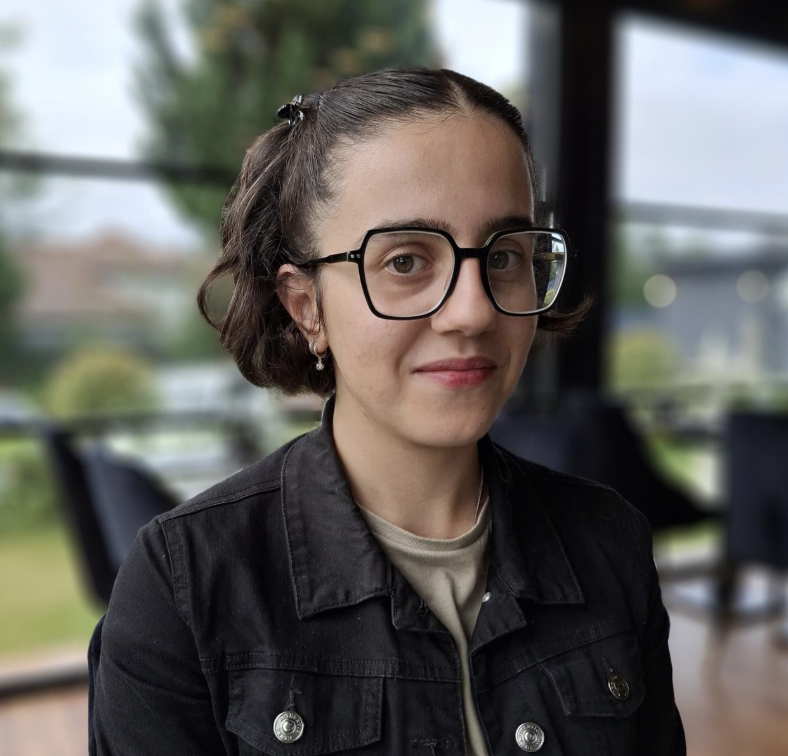
Sophia is an autistic individual who provides mentoring, training, and research consultancy, with a particular focus on autism. She has a PhD in psychology, and in 2024 completed Imroc’s Autism Peer Support Worker training. Sophia currently works as a peer support worker for neurodivergent young people, drawing on both professional expertise and lived experience.
Katja Milner

Katja Milner is an Associate Consultant for Imroc and led the autism peer support worker training evaluation. She has an ESRC PhD in mental health and wellbeing from the University of Nottingham and has expertise in mental health, recovery and spirituality in practice, research, teaching and training. She is senior lecturer for an MA in Spirituality Ecology and Mental Health at Buckinghamshire New University and works with mental health and neurodiversity with young people in secondary schools.
Liz Walker

(Senior Imroc Consultant / Live Well Programme Lead)
Liz trained as an Occupational Therapist in the early 80s but spent most of her career in the NHS working in non OT specific roles these included roles in innovation, project management and research.
As she moved away from Occupational Therapy she became much more interested in “people focused” roles and she became acutely aware of the importance of her values informing her practice and relationships.
This passion for sharing her experiences to make connections and build relationships with people quite naturally led Liz into developing her skills and interest in recovery focused practice and peer support.
She brings 13 years of experience coproducing and delivering peer support training. She led the development of peer support worker roles in her local NHS Trust and has worked nationally and internationally supporting a wide variety of organisations to develop both their recovery focused practice and their peer workforce.
Prior to moving into the LiveWell role she led the Mental Health Peer Support Programme and the Neurodiversity Programme.
She has proven track record of co creating high quality, innovative, and inclusive services. She values the power of shared experience and believes that communities can drive change. Liz encourages curiosity and creativity in everyone she meets recognising these qualities are important as scientific evidence for helping people grow and develop.
Liz is very proud to be leading the Live Well Programme and in a role where she can use ALL of her lived and life experiences and skills she has developed over her 40 year career.