
This webinar is online on Zoom
Book your place
To book a place please email events@imroc.org with“CEaD” in the subject line.
Overview
This webinar, the first in a 3-part series showcasing Imroc’s Community Engagement and Development (CEaD) programme, will provide a clear overview of this structured, values-driven and relationship-focused approach.
Voices from marginalised and underrepresented in Leicester and Birmingham will illustrate key concepts and highlight how their involvement in CEaD has supported their own communities to strengthen connections, build confidence and influence local priorities.
Date and Time
Wednesday 13th May, 12:00 – 1:30pm BST (UK time)
What to Expect
We’ll outline the purpose and principles behind CEaD and explain why many systems are now exploring this model to strengthen prevention, early intervention, and community wellbeing. The session highlights the difference CEaD can make and what organisations gain when they invest in this way of working.
We work across multiple communities, but in this session, we draw specifically on our experiences with the Bangladeshi community in Leicester and underrepresented communities in Birmingham to illustrate key concepts. Webinars 2 and 3 will include a wider range of examples from other communities and settings.
This session sets the scene for the series, introducing the core ideas that will be explored in more depth in later sessions.
Key Takeaways and Benefits of Attending
Participants will:
Gain a clear understanding of the purpose, principles, and foundations of CEaD
Understand how CEaD differs from traditional engagement and why a relationship-led approach matters
Learn how CEaD helps build stronger, more connected and confident communities
Hear practical insights and learning from work with multiple underrepresented and mariginalised communities in Birmingham and Leicester
Understand how this approach supports prevention, early intervention, and improved community wellbeing
Be clear on how the next webinars will build on this learning and how they can stay involved
Why join the full series?
You will come away with:
A solid understanding of what CEaD offers
Real world examples drawn from our work with diverse communities
Insight into how CEaD strengthens neighbourhoods and systems
Clarity on how CEaD can support organisational priorities
Speakers & Guests
Liz Walker

Liz Walker (Senior ImROC Consultant / Community Engagement and Development Programme Lead)
Liz trained as an Occupational Therapist in the early 80s but spent most of her career in the NHS working in non OT specific roles these included roles in innovation, project management and research.
As she moved away from Occupational Therapy she became much more interested in “people focused” roles and she became acutely aware of the importance of her values informing her practice and relationships.
This passion for sharing her experiences to make connections and build relationships with people quite naturally led Liz into developing her skills and interest in recovery focused practice and peer support.
She has 13 years of experience coproducing and delivering peer support training. She led the development of peer support worker roles in her local NHS Trust and has worked nationally and internationally supporting a wide variety of organisations to develop both their recovery focused practice and their peer workforce.
Prior to moving into the Community Engagement and Development programme (CEaD) she led the Mental Health Peer Support Programme and the Neurodiversity Programme.
She has proven track record of co creating high quality, innovative, and inclusive services. She values the power of shared experience and believes that communities can drive change.
Liz encourages curiosity and creativity in everyone she meets recognising these qualities are important as scientific evidence for helping people grow and develop.
Liz is very proud to be leading the CEaD Programme and is delighted she is now in a role where she can use ALL of her lived and life experiences and skills she has developed over her 40 year career.
Majeda Dewan Islam
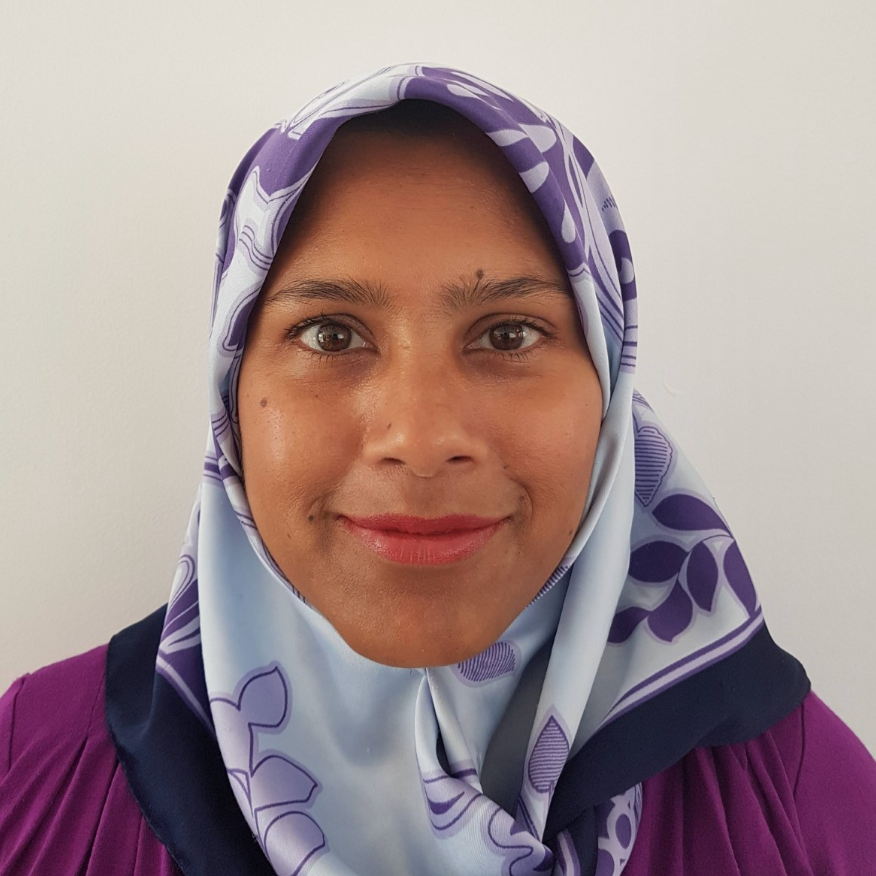
Majeda is one of a kind! A sports coach and football referee, she helps people improve their mental health primarily through participation in sport. She also has over 30 years of experience in community work and in a wide range of roles in different care settings. She advocates greater rights and increasing accessibility for some of the most vulnerable people in society, helping partners to also recognise the need for organisational change in meeting their responsibility to the wider community. Her force for change stems from lived experiences as a Bangladeshi child migrant and other challenges she has navigated throughout her life, demonstrating that with the right support system in place, anyone can thrive.
Fakhrul Islam (Faz)

Faz Islam is a recovery-focused peer practitioner and community advocate passionate about promoting mental health awareness and strengths-based support. With experience working within the NHS in a security role, he developed valuable insight into supporting individuals experiencing mental health challenges. Faz has also worked as a wellbeing and fitness coach, helping people improve their physical and emotional wellbeing. He is actively involved in community work that raises awareness and challenges stigma around mental health. Faz is currently completing a Level 3 Mental Health Peer Support course with Imroc, using his lived experience to inspire hope, empowerment and recovery.
Sandev Panaser

University Peer Support Lead and Peer Support Hub Lead, NIHR Fellow University College London, Birmingham and Solihull MHFT
Sandev Panaser is the Peer Support Hub and University Peer Support Service Lead at Birmingham and Solihull Mental Health NHS Foundation Trust, where he leads peer support services across NHS and universities. He has developed and overseen pioneering models of early intervention mental health support for students, including cross sector partnerships spanning multiple universities in Birmingham. His work focuses on embedding lived experience within services, improving access, recovery, and outcomes through relational, person centred approaches.
Alongside his NHS leadership role, Sandev has been involved with UCL through fellowship and research activity exploring peer support, student mental health, and transitions back into higher education following mental health related leave of absence. His interests include systems change, inequalities, co production, and the role of lived experience in shaping more compassionate and effective services.
Sandev brings a unique blend of strategic leadership, frontline experience, and entrepreneurial thinking, with a passion for building partnerships that improve wellbeing across health, education, and communities
Claire Rigby

Strategic Lead, VCSFE & Partnership, ICCR Transformation Team, Birmingham &Solihull MHFT
Claire has over 30 years project management experience from corporate, statutory and charitable sectors including senior management roles for National Charities such as Groundwork, Fairbridge National Youth Charity and The Prince’s Trust where she was elected Head Of Health & Wellbeing and has experience on advisory bodies challenged with delivering Children and Young People’s mental health criteria Outcomes Framework for Central Government.
In the Public Sector Claire has worked for both the Adult Mental Health Service (AMHS) in Birmingham & Solihull Mental Health NHS Foundation Trust and for Birmingham Children’s Hospital in Children & Adolescent Mental Health Services (CAMHS). Her work as Partnership Mobilisation Lead for the Birmingham Children’s Hospital’s 0-25 mental health service, Forward Thinking Birmingham (FTB) focused on identifying innovative approaches through partnership to deliver a more community focused model delivered in partnership with the voluntary and community sector and other statutory agencies at both a universal and targeted level of care. Currently in her Role as Strategic Lead for VCFSE & community partnership and development she leading the Community Health Inequalities programme for BSMHFT ICCR Directorate.
Emma Watson - Facilitator

Emma Watson is the programme lead at Imroc for Research, Evaluation, Publications and Development, and, until recently, was the Peer Support Lead at Nottinghamshire Healthcare NHS Foundation Trust. As Peer Support Lead, she has led the strategic introduction of peer support workers into a range of clinical services, establishing training and supervision processes to support this development. Prior to this, Emma worked in a number of peer roles, including peer support worker, peer supervisor, peer trainer and peer researcher. Emma was among the first peer workers to be employed in Nottingham NHS Trust in 2010; an experience which transformed her own recovery, as well as her understanding of the power of lived experience.
As a programme lead at Imroc, Emma aspires to centre lived experience perspectives in research and publications, and offer accessible, creative ways for knowledge to be developed and shared. She is leading on the development of an MSc in Lived Experience Leadership as well as overseeing Imroc’s research and evaluation projects. Emma's commitment to advancing peer support is further demonstrated through her extensive research publications. She has authored numerous articles, as well as co-authoring the book "Peer Support in Mental Health," which provides an in-depth exploration of peer support concepts and practices. Her PhD explored peer support in the context of an NHS service, especially how this context changes or constrains peer support, and how individual peer workers resist this process.