
HF Care and our Culturally Competent Recovery College
Erica Wan, Rozhin Nemati Mood, Moshe Sakal, Adam Chen
If you would like to reference this paper, please use the following citation:
Wan, E., Nemati Mood, R., Sakal, M., Chen, A. (2026). HF Care and our Culturally Competent Recovery College. Imroc.
Introduction to the 'Sharing our Experiences' Series
This Imroc Recovery Colleges 'Sharing Our Experience' series enables Recovery Colleges in different countries to share developments and innovations and explore how the principles on which Recovery Colleges are founded can be applied in different ways and in different contexts. This is the sixth paper in this series, and you can find a list of the other pieces at the end of this paper.
In this paper, colleagues from Toronto, Canada, describe the development of HF Care and their Culturally Competent Recovery College in the context of the Greater Toronto Area – an area that, as the authors describe is "home to over 7 million people with more than 250 ethnic communities who speak over 150 languages".
However, equally importantly, it involved building trust, adapting the language and terminology used to that of the culture of the communities served, and breaking down barriers created by the unfamiliar cultural frameworks of traditional models of mental health care.
Founded in 1982, HF Care developed from a realisation among a group of Chinese care providers that Chinese-speaking immigrants struggled to access mental health care services as a consequence not only of language barriers but also unfamiliarity with a healthcare system that did not understand their culture and community.
One of the first ethnocultural-specific community mental health organisations in Ontario, HF Care initially served Cantonese-speaking Chinese and Vietnamese refugees. It has since expanded to include Cambodian, Vietnamese, Korean and Mandarin-Speaking Chinese communities and has grown from a staff team of 1.5 people to over 60 professionals offering a wide range of services working across Toronto and its suburbs.
Their Recovery College (and a Discovery College for youth and young adults founded in 2021) adapted the principles on which Recovery Colleges are founded to make them culturally relevant for the communities served by the organisation. Like the Tower Hamlets Recovery College in London (see Sharing Our Experience Paper 2), this involved addressing language barriers.
However, equally importantly, it involved building trust, adapting the language and terminology used to that of the culture of the communities served, and breaking down barriers created by the unfamiliar cultural frameworks of traditional models of mental health care. We are impressed with the detailed attention to an ongoing process of co-production (co-design, co-delivery, and co-review) that the authors describe. This, together with the development of a more formal model of peer support, designed to build organisational capacity and empowered peer leaders, were critical in achieving a culturally competent Recovery College. Equally impressive is the impact that these have had beyond the Recovery College to the HF Care organisation as a whole.
We would like to thank HF Care colleagues for sharing their experiences. We are sure that they will be of great value to other Recovery Colleges seeking to better serve the diverse communities of which they are a part.
Rachel Perkins,
Imroc Senior Consultant
Introduction
For a country that is now known for its multiculturalism and diversity, Canada’s identity for most of the 20th century was homogenous, with immigration coming largely from European countries. Starting in the 1970s things began to change, with nearly half of all new immigrants originating from Asia, South America, and the Caribbean.
These newcomers settled in major urban centers including Montreal, Vancouver, and Toronto, contributing to the cultural mosaic that characterizes these cities to this day. This shift had a profound impact on many aspects of Canadian society, including healthcare, social services, and mental health care. It is here that HF Care and its Culturally Competent Recovery College have their roots.
History of HF Care
Located in the Greater Toronto Area (GTA), home to over 7 million people with more than 250 ethnic communities who speak over150 languages, HF Care began as a grassroots effort to address the mental health needs of the East Asian and Southeast Asian communities. With the new wave of immigration, Chinese-speaking people seeking help in hospitals were often turned away. Hospital staff could not communicate with them or understand their cultural context, leaving families on their own.This harsh reality inspired a small group of Chinese care providers, including psychiatrists, social workers, and a public health nurse. In a conversation over dim sum in Toronto’s Chinatown, they discussed the struggles immigrant communities faced when accessing mental health care and recognized two glaring gaps: language barriers and unfamiliarity with the healthcare system often left families without adequate support for their loved ones. Their idea was born out of this urgent need. After four years of persistent proposal writing, HF Care was founded in 1982 as one of the first ethnocultural-specific community mental health agencies in Ontario and was a pioneer in culturally appropriate care. Initially, the agency served Cantonese-speaking Chinese and Vietnamese refugees, and later expanded to include Cambodian, Vietnamese, Korean, and Mandarin-speaking communities. The HF in HF Care stands for “Health” and “Felicity”, and reflects the agencies previous name, Hong Fook, the translation of these words in Cantonese.
Early challenges were substantial: funding was scarce, and recruiting qualified staff from these communities was difficult. With few trained mental health professionals available, HF Care innovatively retrained Cambodian and Vietnamese school teachers from non-health backgrounds to become compassionate, community-based mental health workers. At a time when mental health carried heavy stigma within these communities, HF Care confronted the issue boldly. Their first public education session was provocatively titled “Are You Crazy?” and chosen intentionally to spark open conversations and reduce mental health stigma by bringing it out of the shadows.
Today, HF Care, has grown from a small team of one and a half staff to over 60 professionals working across multiple offices in Toronto and its suburbs. The agency now offers a wide range of services, including clinical case management, supportive housing, recovery programs, youth and family services, and community education and outreach initiatives focused on mental health promotion and prevention. With the support from its healthcare collaborations, HF Care provides a continuum of integrated primary care and mental health services covering the spectrum from promoting wellness to managing illness in the East and Southeast Asian communities. All these services aim to offer holistic mental health care, grounded in cultural competence, community engagement, and language-specific support, allowing individuals to access services according to their diverse needs through a stepped-care and person-centered model.
This is our story of establishing Canada’s first Culturally Competent Recovery College.
A Need for Change…
The road to building our Culturally Competent Recovery College began in 2015 when we participated in a system-level initiative called Peer Positive. This initiative was a community-led process created by the Northwest Toronto Service Collaborative and sponsored by the Provincial System Support Program at the Centre for Addiction and Mental Health (CAMH). The goal of Peer Positive was to reimagine service delivery in a way that supports children, youth, families, and caregivers, while addressing systemic barriers related to power and equity. The initiative aimed to prepare organizations to better engage people with lived experience through equitable processes guided by three core components: a commitment to deepening peer involvement, creating meaningful opportunities for service providers to reflect on their own roles and responsibilities, and keeping organizations accountable for peer feedback. Forty service providers, peers, and community members received training in Peer Positive concepts and practices, and HF Care was one of only three organizations to pilot-test the model.
Our early success with Peer Positive was evident in 2016 when our staff and peers collaborated to run an eight-week peer-led drop-in program. This was our first attempt at coproduction and involved peers and staff working together to co-design, co-deliver, and co-review the program, with peers making key decisions on the program structure, activities, and delivery.
The experience inspired our team to continue, and in the spring of 2017, we launched a strategic planning initiative to revamp programs and guide program development for the following three to five years. Management formed a dedicated task force to carry out a comprehensive review of existing programs and services with the aim to address anticipated challenges, while responding to the evolving needs of the communities we serve. The process involved a wide range of stakeholder consultations, including input from peers, family members, board members, staff, volunteers, and community advisory committee members. These efforts helped identify both strengths and service gaps, while gathering best practices that could be adapted to fit our unique cultural and community context. Based on the findings of the review, the task force proposed a reorganization of existing services into an integrated model of our programs. This revamp became a pivotal step in the development of our Culturally Competent Recovery College and led to the hiring of a dedicated peer coach in 2018 to support ongoing peer involvement. Looking back, these years were the beginning of a major shift in our organizational culture, values, and practices, that helped us meet the needs of the people we serve by focusing on balancing power and valuing experiential knowledge.
Our Culturally Competent Recovery College
In 2018, our team joined the Impact and Strategic Clarity program offered through Innoweave, an initiative of the MakeWay Foundation (formerly the J.W. McConnell Family Foundation), with funding from United Way Greater Toronto. A working group was formed to lead this next stage of planning, consisting of board members, management, frontline staff, a peer coach, and peers with lived experience. With support from an Innoweave coach, the group collaborated to develop and test a set of outcome goals and a theory of change, refining their ideas through research and team discussions.
Through this process we recognized the potential of the recovery college model and how it aligned with our goals and intentions. We were inspired by staff at The STAR (Supporting Transitions And Recovery) Learning Centre, formerly at St. Michael’s Hospital, and saw an opportunity to adapt the recovery college model to be culturally relevant for our communities.
This journey and inspiration led to launching our Culturally Competent Recovery College in April 2019. In the Fall of 2021, we also launched a Discovery College for youth and young adults, 16-29 years old. With the support of our community partners and subject matter experts we provided art-based and other courses with youth mental health, leadership, and resilience in mind. We also provided training for youth peer supporters at that time. The remainder of this paper focuses on our Recovery College journey.
Our Recovery College is open to anyone, whether they are experiencing mental health challenges, supporting someone with mental health concerns, or are looking to improve their well-being. We refer to our participants as “peers” instead of “students”, to imply a more intimate relationship which is important for newcomers, while each community adapts terminology according to their language and culture (see Terminology Box).
We embrace the need of bringing cultural competence into the design and delivery of our courses and recognize that traditional models of mental health care often fail to resonate with racialized or immigrant populations due to language barriers, unfamiliar cultural frameworks, and intergenerational stigma. So, rather than expecting peers to adapt to the system, we actively work to adapt the system to those it serves. This includes translating our website, promotional material, and program or course content into one of the five languages we serve (Cambodian, Cantonese, Korean, Mandarin, and Vietnamese) and holding workshops that reflect culturally specific understandings of wellness, illness,
“When I first came to HF Care’s Recovery College, I couldn’t see a future for myself. I didn’t know there was a place where people would understand me. Here, I found connection, learned how to care for my mental health, and slowly began to share my story. It feels good to be able to speak about what I’ve been through. Now, as a peer supporter and volunteer at the front desk, I can welcome others in the community that welcomed me.”
- Kitty Wong, Peer Supporter and Front Desk Volunteer
Foundations of a Formal Peer Support Model
An element of informal peer support existed at our agency for many years with peers or family members connecting, sharing their daily lives, and leaning on each other for support in various programs and initiatives.
In early 2020, following the launch of our Recovery College, we decided to introduce a more formal peer support model to help build our peer supporter capacity to create spaces and opportunities that encourage peers to share their mental health experiences more openly through peer support groups – continuing to build on our agency’s roots by bringing mental health experiences out of the shadows and addressing stigma in our communities more directly.
Through our community partnership with Hope + Me (formerly Mood Disorders Association of Ontario), we began delivering peer support training in English, first to the Cantonese community, and later included peers from the Mandarin, Korean, and Vietnamese communities. Peers become peer supporters, who are volunteers with honorarium, after completing the peer support training and facilitate peer support groups for other peers and family members. We also have the Community of Practice (CoP) and Skill Lab, led by our peer coach monthly to provide a space for the peer supporters to debrief about their experiences of peer support group facilitation and for continuous skill training.
Complimenting the role of peer and family supporters who are more directly involved in our coproduction process, are a group of program supporters who assist our staff to run programs in other ways. For example, by sharing their skills and talents with their peers during programs. Currently, twenty-four peer, family, and program supporters are involved in our Recovery College.

Peer, family, and program supporters at our annual appreciation event with staff.
During the COVID-19 pandemic the peer supporters made a significant contribution by helping our team adapt to the lockdowns and maintain social connections in our communities. They supported our staff as we pivoted to offer virtual programs that remain available today, increasing access and connection for peers across a wider geographic area.
Together with our Recovery College courses, our peer support groups are helping us achieve our objectives of reducing stigma by bringing peers together in a safe and empowering environment. As peers continue to connect, gradually some feel more comfortable to share their recovery journey and mental health experiences.
“The Recovery College provides us with a safe space to share things you usually don’t get a chance to talk about. Peer supporters and staff are really friendly, open-minded and empathetic. Instead of being alone and hiding at home all the time without any purpose, I have something to look forward to that keeps me busy each week.” - Peer
These initiatives not only helped build our organizational capacity, but they also helped create empowered leaders in our peer and program supporters. Their involvement and contribution continue to shape the delivery of our programs and services to be more culturally responsive.
Our Experience with Coproduction
The commitment of our founders to the East Asian and Southeast communities in our early years are signs that coproduction has been at the heart of our organization from the very beginning, with services and programs responding to the needs of our communities. Launching our Recovery College helped enhance our coproduction approach and helped to take it to a new level. Today, our coproduction model involves peer supporters in the co-design and co-delivery of our courses. Ongoing feedback from peers is especially important as it helps shape future courses and programs.
Our previous recovery program was very traditional and delivered in a conventional way. Services were offered through a professional and paternalistic approach intended to help manage risks of the mental health challenges of the peers Developing our Recovery College changed our model of care from a traditional approach to a strengths-based learning environment rooted in adult education and co-production.
Our first coproduction program was delivered in 2020 during the COVID-19 pandemic when our peer supporters played an important role in helping their peers access care and helped them overcome social isolation. To help provide connection with peers during this time, we included peer or program supporters at the end of our art and exercise programs, to help build a sense of connection among peers. Almost all programs were run by staff, instructors, and peer and program supporters working together.
In response to the impact of COVID-19 on mental health, we decided to have a compassion course, with the intention to support our peers in developing their self-compassion and help them cope with their difficult emotions. It was based on Compassionate Mind Training (Irons & Heriot-Maitland, 2021), which is an eight-session course, with three hours for each session. To begin the coproduction process, we launched a co-design task force for the course in July of 2022 that involved staff, peer supporters and a consultant. Both staff and the consultant are registered psychotherapists. We aimed to adapt the course to the Korean and Chinese communities, working together to co-design the course.
In our coproduction meetings, staff walked through the course content with the peer supporters whose feedback helped shape and trim the course content. Session plans were discussed, and the group session activities were co-designed, with the course being co-delivered with peer supporters. With assistance from the consultant, who specialized in Compassion Focused Therapy and Compassionate Mind Training, the final version of the course was trimmed to four two-hour sessions. The material covered the very basic ideas of compassion, self-compassion, and compassion practice, and all the course materials were translated in Cantonese, Mandarin, Korean, and Vietnamese. To further help support participants, our peer supporters led 12-week peer support groups following the course; to encourage peers to maintain their compassion practice and apply lessons they learned to their daily lives.
The coproduction journey continued in unexpected ways as we were inspired from a conversation in the peer support group of the Chinese compassion course. One participant shared that as someone from the Chinese community, it was too hard to imagine their ‘compassionate self’ and have compassionate self-talk. One of our peer supporters, who is passionate about and skilled at crocheting, started to crochet her compassionate self, and eventually co-produced a compassionate crochet group with our staff. Peers would learn to crochet, and the social worker shared her clinical knowledge on learning self-compassion and doing loving kindness meditation. Through this coproduction and self-nurturing process peers learned to develop their own compassionate self. The coproduction of compassion course and compassion crochet group highlighted a shift in the power relations of our Recovery College. Traditionally, staff decided, developed, and delivered the programs, top down to the peers. But now, the peers also initiate ideas with a ‘bottom up’ approach and coproduce programs with the staff. This dynamic process is meaningful and empowering to the peers.
“I am very happy to participate in the Recovery College activities. Through these experiences, I have tapped into my potential and improved my self-confidence. Knitting, in particular, has been a powerful tool for practicing mindfulness during my recovery. The rhythmic and repetitive motions of knitting and sewing foster a sense of calm and focus. Additionally, the peer-led group provides a safe space for sharing and bonding, making it an invaluable resource for all of us.” - Peer
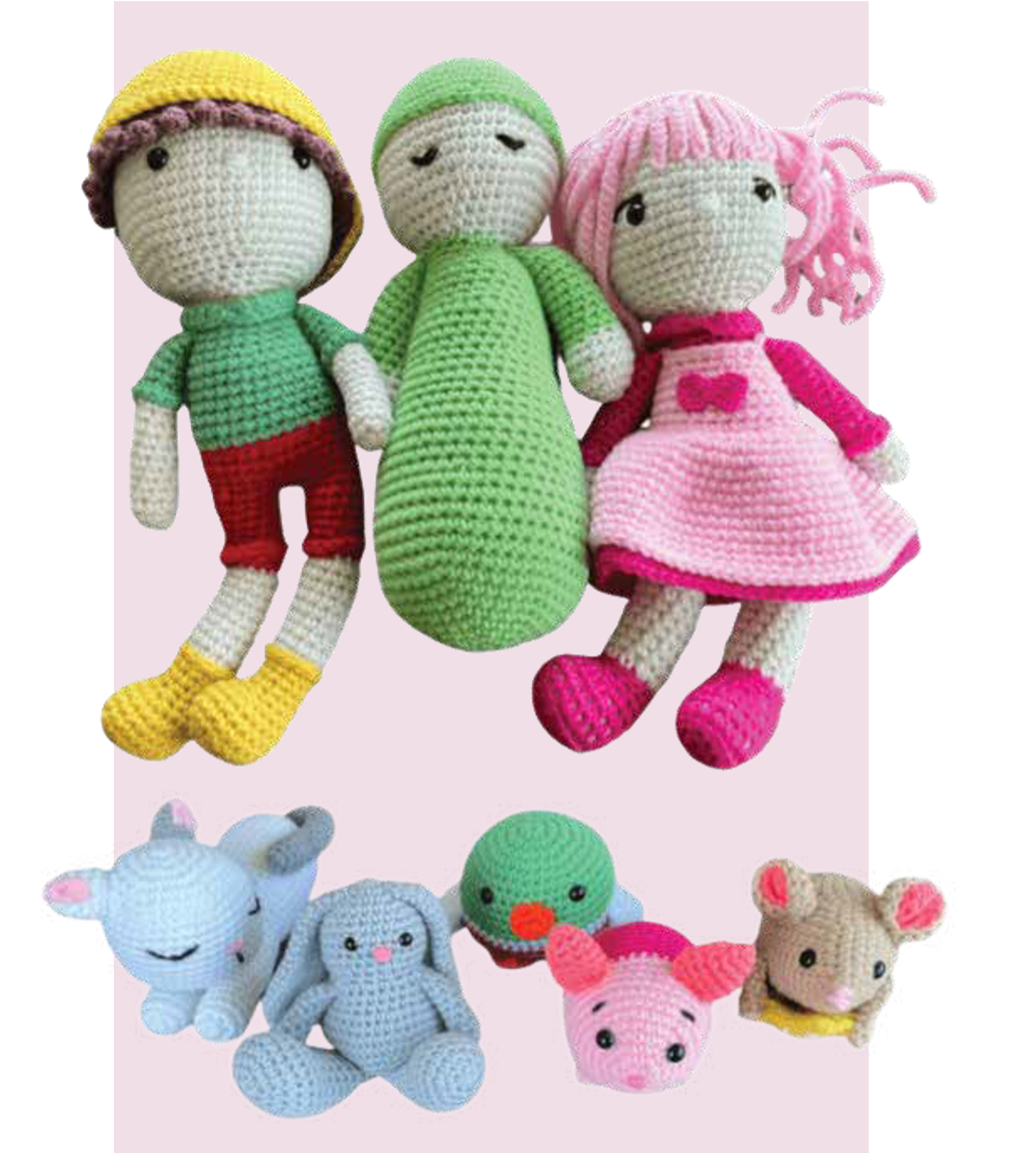
Playful characters created by our peers and peer supporters for fundraising initiatives.
More recently, in the spring of 2025, staff worked closely with three peer and program supporters and trained them in roles that support daily operations of our organization. These roles provided a valuable opportunity for peers to reconnect with their community in a supportive environment. With careful recruitment, thorough training, and day-to-day guidance from the administrative team, peer reception volunteers were able to regain confidence in their existing skills and experience personal growth. Their contributions were also supported by the encouragement of our staff across the organization, reinforcing the sense of inclusion, respect, and shared purpose that we intend with our coproduction process.
But it hasn’t always been smooth sailing and there were coproduction experiences that taught us what doesn’t work as well.
For example, in early 2022 we started the coproduction of Pathways to Recovery courses. The intention was to deliver a series of courses built around this workbook. Our peer supporters and peer support workers in the Cantonese, Mandarin, and Korean communities were involved and the group met on a regular basis to discuss the material, course structure, and objectives, including who the courses would be best suited for. The goal of the coproduction process was to reflect their insights, decisions, and their lived experience in the course content. The conversations were meaningful, and the peer supporters and workers had a chance to reflect on their recovery journeys and to listen to each other’s stories. For example, they shared their understanding and personal experience with topics like empowerment, self-determination, and the turning points in their recovery. This process also included a short practice session that gave the peer supporters a chance to deliver part of the course to the larger group of peer supporters in Cantonese or Mandarin. Peer supporters helped with translation, sharing any concerns they had about the content, and helped to select the most important content with their peers in mind.
Though the intentions were good, the approach was too ambitious. In a way the coproduction process turned into a course - too much material was covered all at once and it was too in depth. Though the sharing and reflections in the coproduction sessions were powerful and meaningful, the process took too long. We later recognized that it would have been better to focus on and to deliver small sections of the Pathways to Recovery material along the way as we delivered short courses, instead of trying to coproduce a series of courses all at once. We also learned that a long, drawn-out coproduction process over a period of months can leave peer supporters discouraged and drained. There was also disappointment as not all the courses were delivered as planned as resources and our direction changed. These experiences have been valuable in teaching us about what works best for our team and peer supporters.
A Paradigm Shift
This journey marked a paradigm shift for our organization and community, moving from a top-down approach toward a more collaborative, community-informed model that brings together Western recovery principles and Asian cultural perspectives. This didn’t happen over night and took effort and time to achieve, but it has been worth it, and there were three significant identity shifts that happened along the way including, a shift for our organizational culture and the identities of our staff and peers.
Launching our Culturally Competent Recovery College was only the beginning of our story and there were many conversations and explorations of what each of the co-production principles of co-design, co-delivery, and co-review, meant to both our staff and peers. This involved a multilayered approach that included changes in both thinking and practice across our agency - from board members, through management, to our front-line staff. We recognized that this was a new paradigm of power relations between staff and peers that required patience to negotiate, so that both sides could understand what a collaborative approach looked like. Shifting the identity of staff meant sharing of their power and onboarding a new dynamic of power relations. To support this shift, we provided education and training on Peer Positive and peer support principles, including a training to better understand recovery by implementing The Strengths Model of recovery (Rapp & Gosha, 2012). Through the training process, we learned that there was hesitation among some staff related to the onboarding of peer supporter roles. There were concerns that onboarding peer supporters was happening to save on operational costs, shift responsibilities away from staff and replace their positions. Over time, our staff understood their role in the coproduction approach, gained knowledge on peer supervision, and were better equipped to implement the coproduction process.
The impact of our coproduction approach helped transform peer identities as well. Our peer supporters learned that we valued their points of view and the knowledge they gained from their lived experience. We highlighted that their lived experience is a form of expertise that can help inform and improve our decision-making and the quality of our programs. This helped shift their perspective from being passive service recipients to active learners and contributors. They were no longer only receiving help, but providing it, helping others while continuing their own recovery journeys. Peers attending our courses and peer support groups also adapted to this shift by recognizing that our peer supporters provided value through their presence, sharing, and in their roles. Today, peers continue to discover that they can gain coping skills, find hope, and improve their wellness, by interacting with our peer supporters who offer support outside of the traditional healthcare model that they may be more accustomed to. This paradigm shift has been central to our vision of recovery as a co-created, empowering, and culturally resonant journey, helping us foster a collaborative environment.
“There is nothing ‘wrong’ with me, but simply a gap in my skills, which I have learned here.” - Peer
A Process of Learning and Growing
Redefining power dynamics within our organization took effort and intentionality to empower individuals on both sides of service delivery, leading to spaces that support the well-being and growth of everyone involved. We discovered that perspective taking is a natural part of the implementation and coproduction process. Through many conversations in our CoP and planning meetings, especially in the early years, we build trust, transparency, and a willingness to listen and collaborate with one another.
The multi-cultural nature of our agency also gives us opportunities to learn from each other and reminds us that no single approach works for everyone. Being open-minded and adapting to the needs of each community is the secret to success. For example, while modern clinical terms for “depression” or “anxiety” exist, they are not commonly used in everyday language across Cambodian, Cantonese, Mandarin, Korean and Vietnamese communities. Instead, people describe these experiences in a more holistic way, using concepts that reflect the body, heart, mind, and spirit.
Similarly, in the context of lived experience, the term “peer” is often best understood as “friend” in Cantonese and Mandarin, conveying a more natural and culturally meaningful connection.
In contrast, for Cambodian, Korean, and Vietnamese communities, identifying as someone with lived experience can be stigmatizing, making a direct translation of “peer” less appropriate. Cultural hierarchies also exist in these communities, where age and status strongly influence relationships. This shapes our coproduction process and requires our team to approach it with cultural sensitivity.
Successful coproduction also requires our team to go beyond cultural sensitivity and to be mindful of the capacity, learning curve, and mental health of our peer supporters and staff. It is important to meet people where they are at in their wellness and readiness to engage in coproduction. For example, differences in trauma and recovery histories, professional and cultural backgrounds, and even generational differences within the same culture are all factors that shape peer supporters’ levels of engagement, approaches, and expectations in the coproduction process. Furthermore, engaging peer supporters in coproduction begins at the program participation level, followed by building on opportunities to reflect to peers their strengths and to empower them through collaboration. The art of the process, we’ve learned, is in creating opportunities in different domains of our programs that make coproduction accessible, while aligning with a peer’s recovery journey and goals.
Our peer support programs are still a work in progress, and we’ve learned valuable lessons since our initial implementation, including that you can’t force people to share their lived experiences — you can only create conditions that inspire change and openness. This reflects another important ingredient in our coproduction process: trust.
As the team at Tower Hamlets Recovery College highlighted in a previous Sharing Our Experiences paper (Perkins & Prakash, 2024), building trust is pivotal in connecting with marginalized communities. The role of peer supporters is therefore significant as they help build circles of trust as they share their mental health experiences and recovery journeys. Their compassion and care shape stigma in the community one group and conversation at a time. Finally, we’ve found that our cross-community drop-in programs, courses, cultural events, and nature programs, also help to make peer support accessible by encouraging peers to connect with each other naturally.
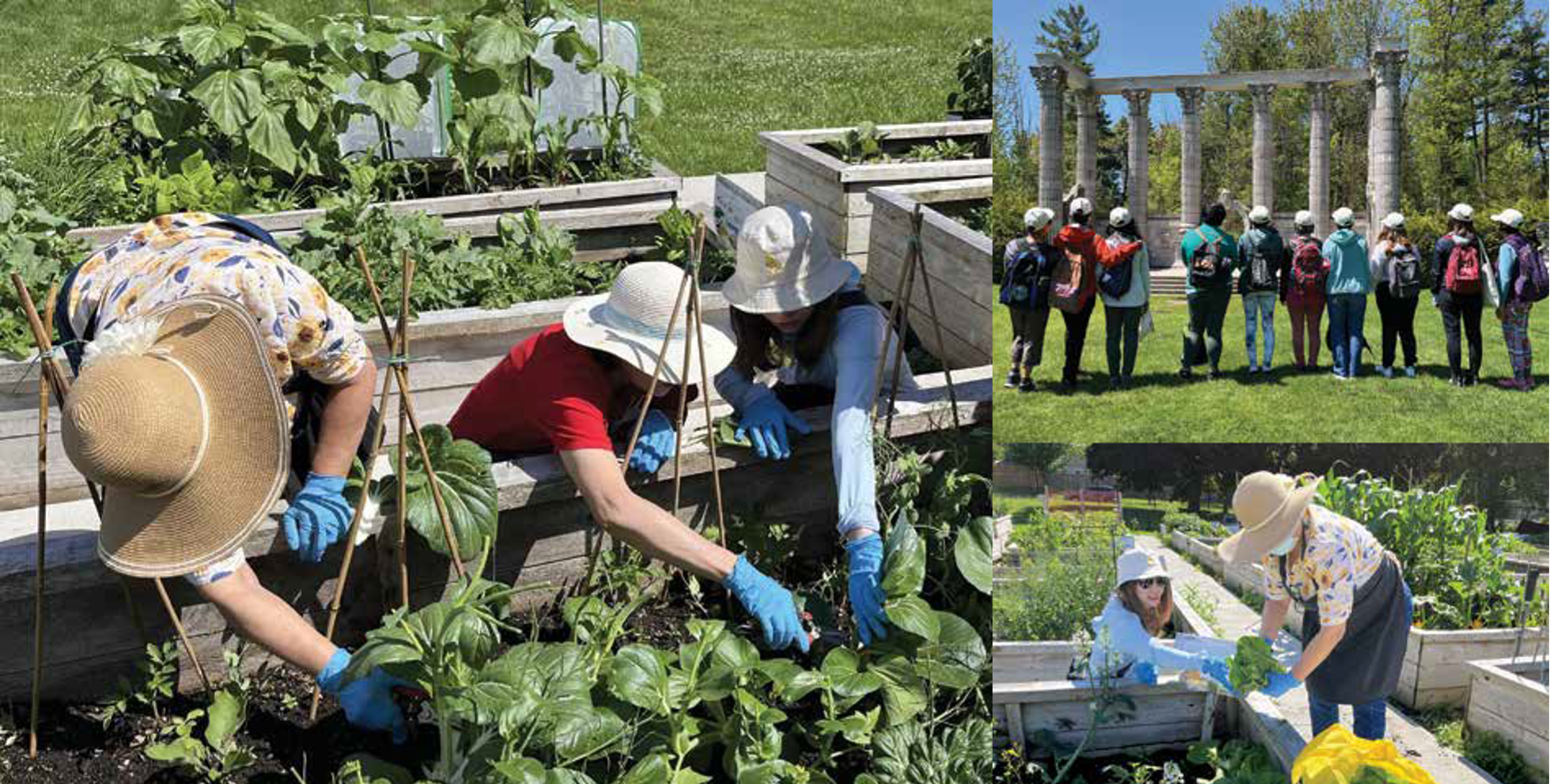
Our Recovery College peers connect through nature programs like our Mindful Gardening and Mindful Walks programs.
Celebrating Milestones and Achievements
The launch of our Culturally Competent Recovery College in 2019, and our first co-produced course delivered in 2020, set a foundational milestone in our commitment to shared leadership. In 2021, we passed the national fidelity review—a significant achievement that validated our model and practices. In 2022, we were honoured with the Team Achievement Award from the Bhayana Family Foundation through the United Way Greater Toronto. The award recognizes teams for their commitment to success through excellent and consistent performance in achieving a common goal. Recognizing the pivotal role of our peer supporters, we engaged in meaningful discussions with United Way Greater Toronto to ensure that they too were fully acknowledged.
Ultimately, all 12 staff and 24 peer supporters were named as award recipients. Their names now appear on the United Way Geater Toronto website as part of the HF Care Culturally Competent Recovery College Team. This affirms their identities, not just as former service users, but as empowered service providers in the community.
| Culturally Competent Recovery College Team | |||
| Hong Fook Mental Health Association | |||
| Alan Lam | Cecilia Yung | Cici Ho | Clara Lee |
| Derek Du | Elsa Chu | Emillie Nguyen | Erica Wan |
| Hearan Jin | Jade Zhang | Jason Wong | John Huang |
| Joseph Shan | Julia Mo | Katie Chen | Kim Nguyen |
| Kitty Wong | Kyeong Won | Linda Wen | Liping Peng |
| Mei Cai | Michael Wong | Mony Mok | Moshe Sakal |
| Na Young Suh | Quoc Truong | Rita No | Sandy Koo |
| Sauwai Cheung | Sha Sha Shen | Soyeon Kang | Sunny Siu |
| Tweety Yuen | Van Truong | Vicky Liu | Zita Long |
In 2022, we were honoured with the Team Achievement Award from the Bhayana Family Foundation through the United Way Greater Toronto. The award included our peer supporters to recognize the pivotal role they play in service delivery.
In 2024, we celebrated being one of only ten Bell Let’s Talk Diversity Fund recipients across the country. The fund supports organizations working to reduce the stigma of mental illness while increasing access to culturally informed mental health and well-being support for BIPOC communities.
These recognitions continue to inspire our work, and our team could not have achieved all our success without the consultation, guidance, and support of community members and partners. As the African proverb reminds us, it takes a village.
One final milestone is our agency’s refreshed brand identity. Our 2025 rebrand was a culturally competent coproduction, rooted in our strategic plan, which revealed a gap between who we had become and how we presented ourselves.
Instead of deciding in a boardroom, we listened widely—through a community survey, alumni session, 12 language- and role-specific focus groups, and 14 one-to-one interviews with staff, donors, alumni, founders, and board members. The result—our first rebrand in over 40 years—renaming “Hong Fook” as “HF Care,” honouring our roots by carrying forward the meaning of Health and Felicity while clarifying who we serve today. The updated name, language, and visuals make our culturally grounded, relationship-centred model easier to understand across communities. The process reaffirmed that coproduction is not about agreement, but about holding many truths—protecting a legacy of trust while opening doors to newcomers. As we embark on this new chapter, we’re excited for the future of our organization and to see how our Culturally Competent Recovery College and our communities continue to evolve together.
Terminology Table
To help create a welcoming experience for participants in our Culturally Competent Recovery College, we adapt the language used to describe people’s roles.
Our students are referred to as “peers” and refers to individuals with lived experience of mental health, with or without a diagnosis. Our term for “family member” refers to anyone in a caregiver role to someone with mental health challenges.
Peers involved in our coproduction are referred to as “peer supporters”. We also have a category of peers who are not involved in coproduction, but offer our staff program support in other ways, and we refer to them as “program supporters”. All of our supporters sign an annual placement agreement that includes an honorarium for their time and contributions.
Each of our communities adapts terminology further to fit their needs, aiming for language that is inclusive and culturally appropriate. For example, in the Cantonese and Mandarin communities, the equivalent to “peer” is “friend”, conveying a warmer connection. In contrast, for Cambodian, Korean, and Vietnamese communities, identifying as someone with lived experience can be stigmatizing, making a direct translation of “peer” less appropriate. Cultural hierarchies also exist in these communities, where age and status strongly influence relationships. This shapes our coproduction process and requires our team to approach coproduction with cultural sensitivity.
Other papers in the Imroc Recovery Colleges ‘Sharing Our Experience’ series
Described the development of the Ontario Shores Recovery College in Canada in a largely clinical mental health services and its impact in driving forward recovery-focused practice across the whole mental health system. https://www.imroc.org/ publications/the-development-of-the-ontario-shores-recovery-college?rq=Ontario
Looked at innovative ways in which the Tower Hamlets Recovery College in London, England, significantly improved the extent to which it served the diverse communities in the area. https://www.imroc.org/ publications/serving-diverse-communities-tower-hamlets-recovery-college?rq=Tower
Explored ways in which Recovery Colleges can better be inclusive of unpaid carers and the experience of Lincolnshire Recovery College, England, in establishing courses for family carers. https://www. imroc.org/publications/ ensuring-that-recovery-colleges-are-accessible-to-family-carers-lincolnshire-recovery-college?rq=carers
Outlined the development of ‘Discovery College West’ for young people in Roscommon and East Galway, Ireland: a College co-created with young people, not just for them, that meets them where they are, speaks their language and values their experiences. https://www.imroc. org/publications/where-young-people-lead-discovery-college-and-a-new-era-of-empowered-mental-health-support-in-ireland
Described the development of the pioneering Melbourne (Naarm) Discovery College, Australia and their award-winning innovation and extension of the Recovery College approach in the form of a podcast ‘Extremely Human’. https://www.imroc.org/ publications/extremely-human-a-discovery-college-journey-into-storytelling-and-shared-learning
-
DescripArbour, S., Stevens, A., Meens-Miller, N., Chiu, M., Rice, M., Rennison, J. & Roeg, W. (2024). Sharing Experiences 1: The Development of the Ontario Shores Recovery College. Nottingham: Imroc.
Leamy M., Bird, V., Le Boutillier, C., Williams, J. & Slade, M. (2011). Conceptual framework for personal recovery in mental health: systematic review and
narrative Synthesis. British Journal of Psychiatry, 199: 445-452.
Irons, C. & Heriot-Maitland, C. (2021). Compassionate Mind Training: An 8-week group for the general public. Psychology and Psychotherapy, 94(3):443-463.
Rapp, A. C., & Gosha, R. J. (2012).
The strengths model: A recovery-oriented approach to mental health services. New York, NY: Oxford University Press.
Perkins, R., Prakash, J. (2024) Recovery Colleges: Sharing Our Experience Number 2 - Serving Diverse Communities: Tower Hamlets Recovery College.
Nottingham: Imroc.tion text goes here